A Reflective Journey into Therapeutic Techniques and Child-Centered Care
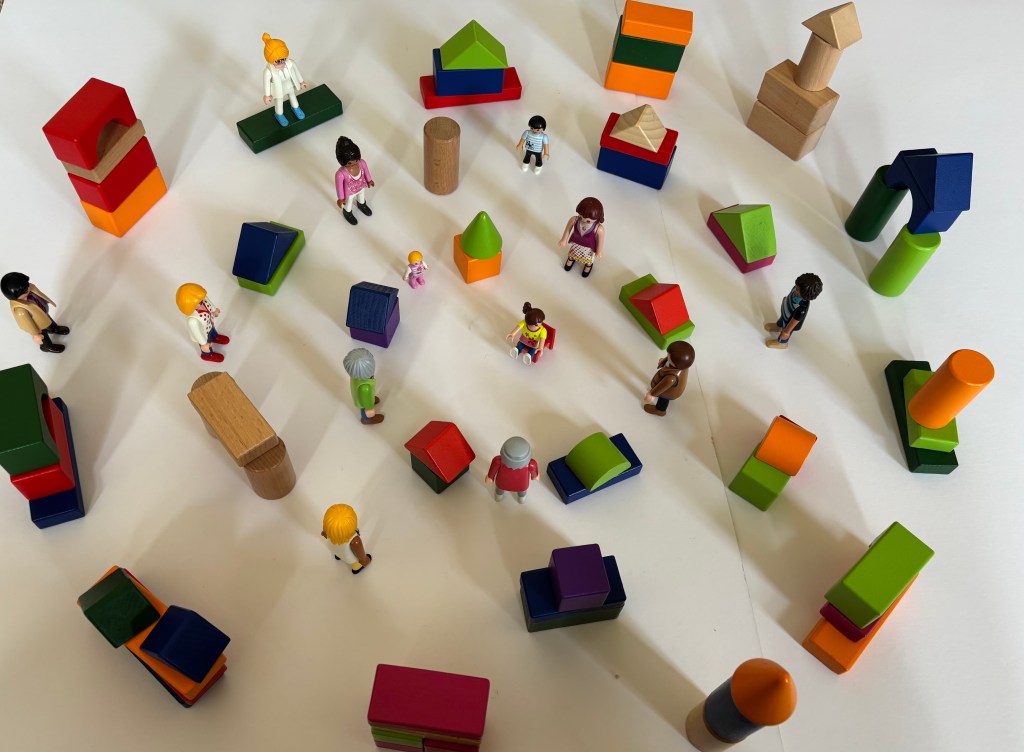
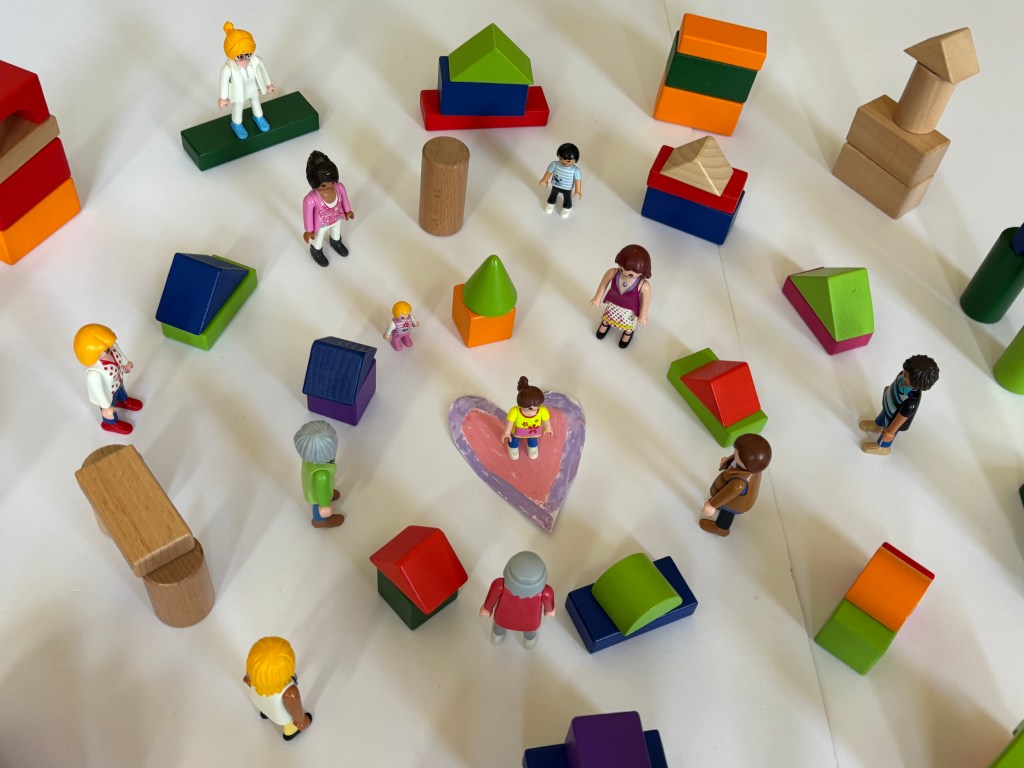
During my training, I was introduced to the person-centred approach, which inspired the idea behind this visual representation. I created a model using Playmobil toys and building blocks to reflect the layered support systems that surround a child. At the centre of the model is a child, placed within a heart shape to symbolise love, care, and the importance of truly listening to them. This heart was also inspired by children I’ve worked with, many of whom like to use heart signs in photos—it’s a small, meaningful detail that reflects their voices and preferences.
Around the child, I created three concentric circles. The innermost circle represents the immediate family, those who are closest to and most familiar with the child’s needs and experiences. The next circle includes professionals such as nurses, social workers, support workers, and friends—people who provide emotional and practical support. The outermost circle represents specialists such as psychologists, doctors, and those working specifically with disabilities, who bring expert knowledge and guidance into the child’s world.
This layered model reflects the belief that every child is at the heart of their own support system, and that everyone involved—professionals, family, and community—must listen to and centre the child’s voice in decision-making. Using Playmobil toys was also personally meaningful, as they were my favourite toys in childhood. This connection to play further emphasises the importance of seeing the world through the eyes of a child and creating environments where they feel safe, valued, and heard.
Creating this model reminded me that meaningful support requires compassion, collaboration, and a willingness to centre the child’s perspective. It helped me reflect on the value of multi-disciplinary teamwork and the emotional connections that make support truly effective
 Rona Thorne